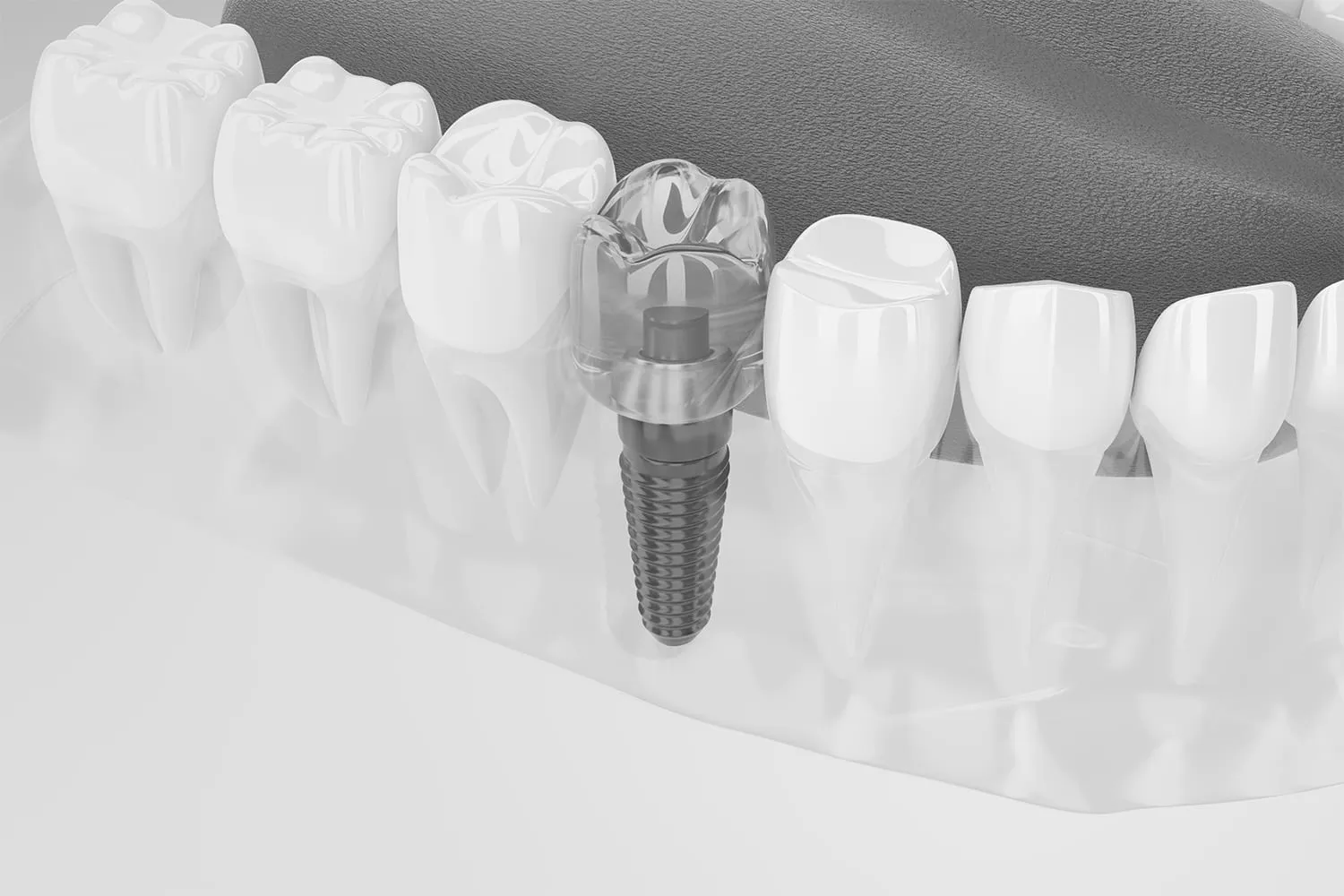
An implant is a titanium screw that takes the place of a natural root. Once the bone has bonded to it, an abutment and crown are attached on top, giving you a tooth that chews much like the original and helping to preserve bone where the tooth was lost. Planning uses 3D imaging of the bone and a review of your general health.
Suited to
- Missing one or more teeth without wanting to prepare the neighbours
- Loose removable dentures that need something to anchor to
- Enough jawbone, or bone that can be grafted
Needs extra assessment or waiting
- Pregnancy
- Uncontrolled diabetes or other unmanaged conditions
- Past head-and-neck radiotherapy, or medicines that affect bone
- Heavy smoking: raises the risk of the implant not integrating
- Under 18 (the jaw is still growing)
Steps
- 1 Examination, 3D imaging, digital scan and implant planning
- 2 Treating any oral disease, or bone grafting, first if needed
- 3 Implant placement under local anaesthetic
- 4 Healing while the bone bonds to the implant, usually several months
- 5 Abutment, scan and final crown
After placement
- Some swelling or tenderness early on; use a cold compress and take medication as advised
- Soft food, chewing on the other side
- No smoking or alcohol
- Clean around the implant like a natural tooth and keep every review appointment
Common questions
Does it hurt?
The procedure is done under local anaesthetic. Afterwards there can be soreness or swelling, depending on complexity, for example whether bone grafting was needed. You’ll get medication and clear aftercare instructions.
Which implant brands do you use?
We work with several systems and choose based on your bone and the tooth position. Message us for details.