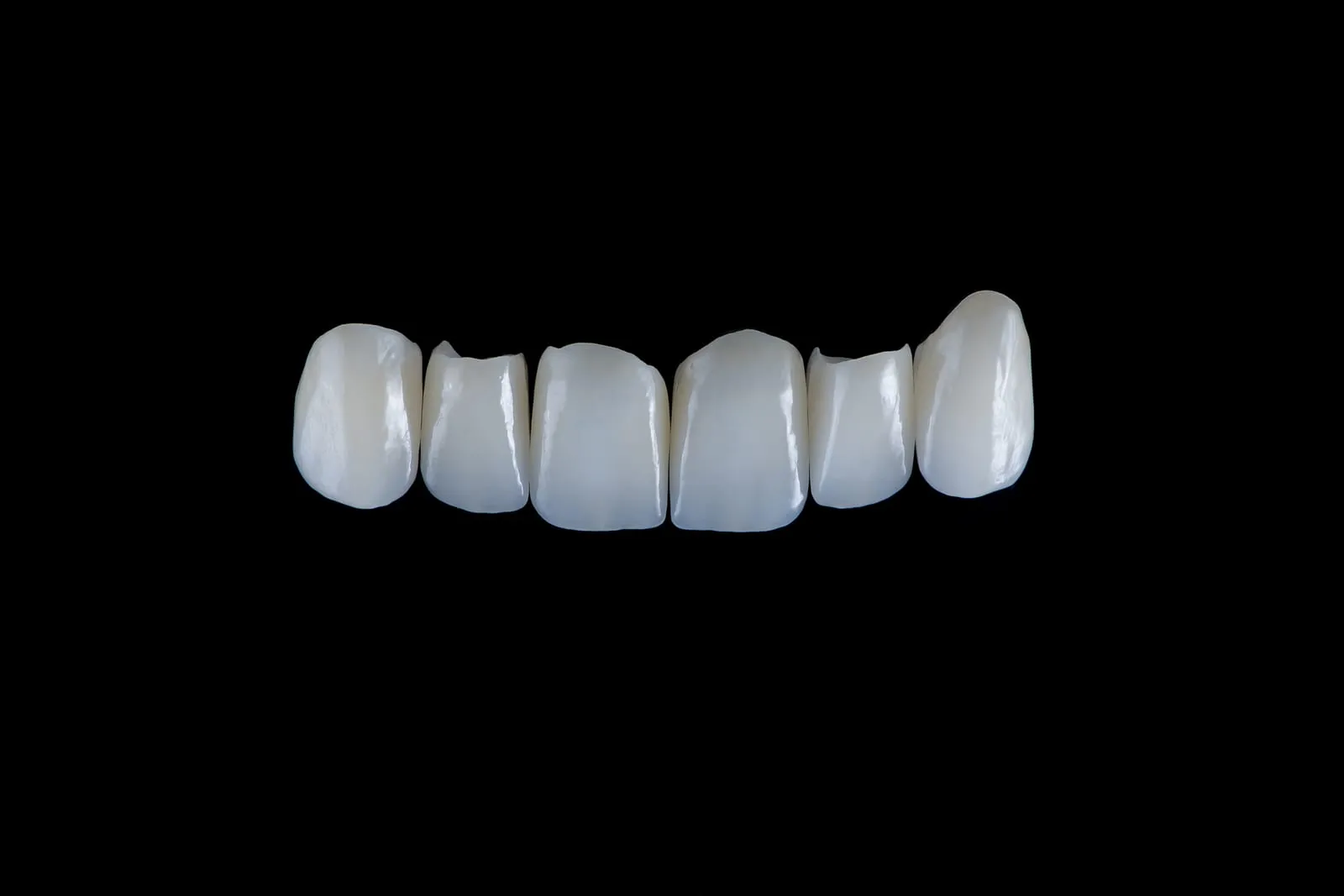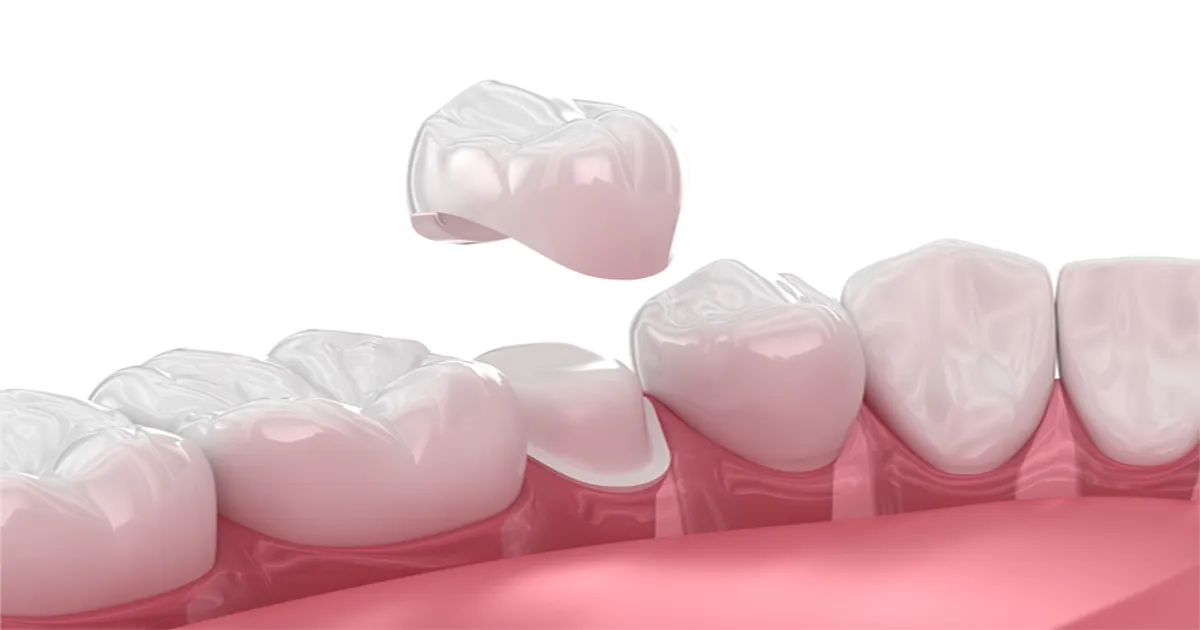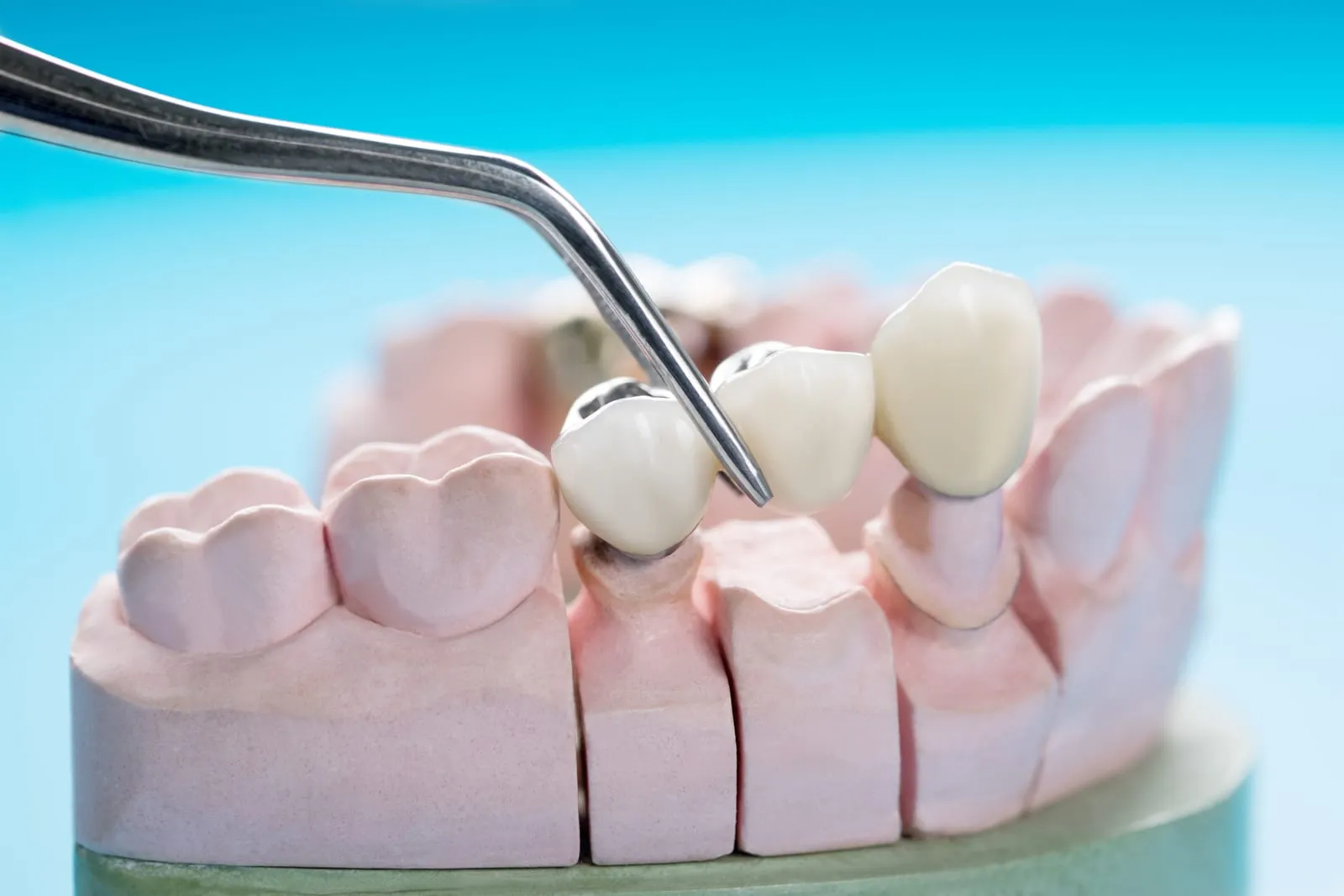
A gap from a missing tooth makes chewing harder and lets the neighbouring teeth tip into the space. A bridge is a set of joined crowns anchored to the teeth on either side, with a replacement tooth suspended in between.
Types of bridge
- Traditional: anchored on both sides; the strongest, but two teeth are prepared
- Cantilever: one anchor tooth; for some positions with lighter biting forces
- Maryland: wings bonded behind the neighbouring teeth with minimal preparation; mainly for front teeth
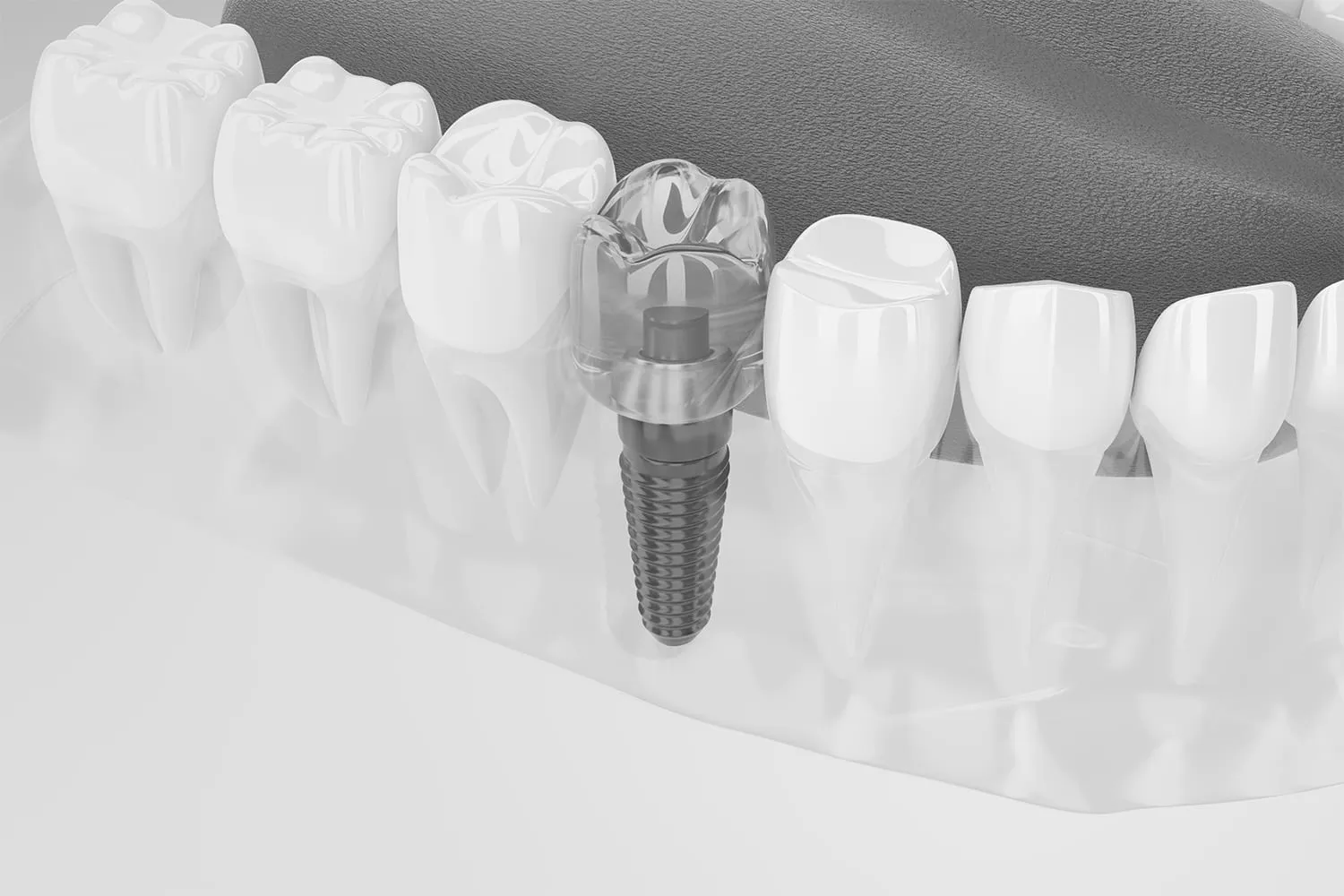
- Implant-supported: implants act as the anchors instead of natural teeth
Steps
- 1 Check the anchor teeth and gums
- 2 Prepare the anchor teeth
- 3 Digital scan to the lab; temporary bridge fitted
- 4 Try-in, bite adjustment and cementation
Looking after a bridge
Food collects under the suspended tooth, so clean there daily with threader floss or an interdental brush, and keep up six-monthly checks, because decay in an anchor tooth affects the whole bridge.
Common questions
Bridge or implant?
It depends on the neighbouring teeth and your bone. If the neighbours are healthy and you’d rather not prepare them, an implant is often preferred; if they already need crowns, a bridge makes sense. We’ll walk you through the trade-offs.